
CPR Under Fire: Tactical Resuscitation When Seconds Count
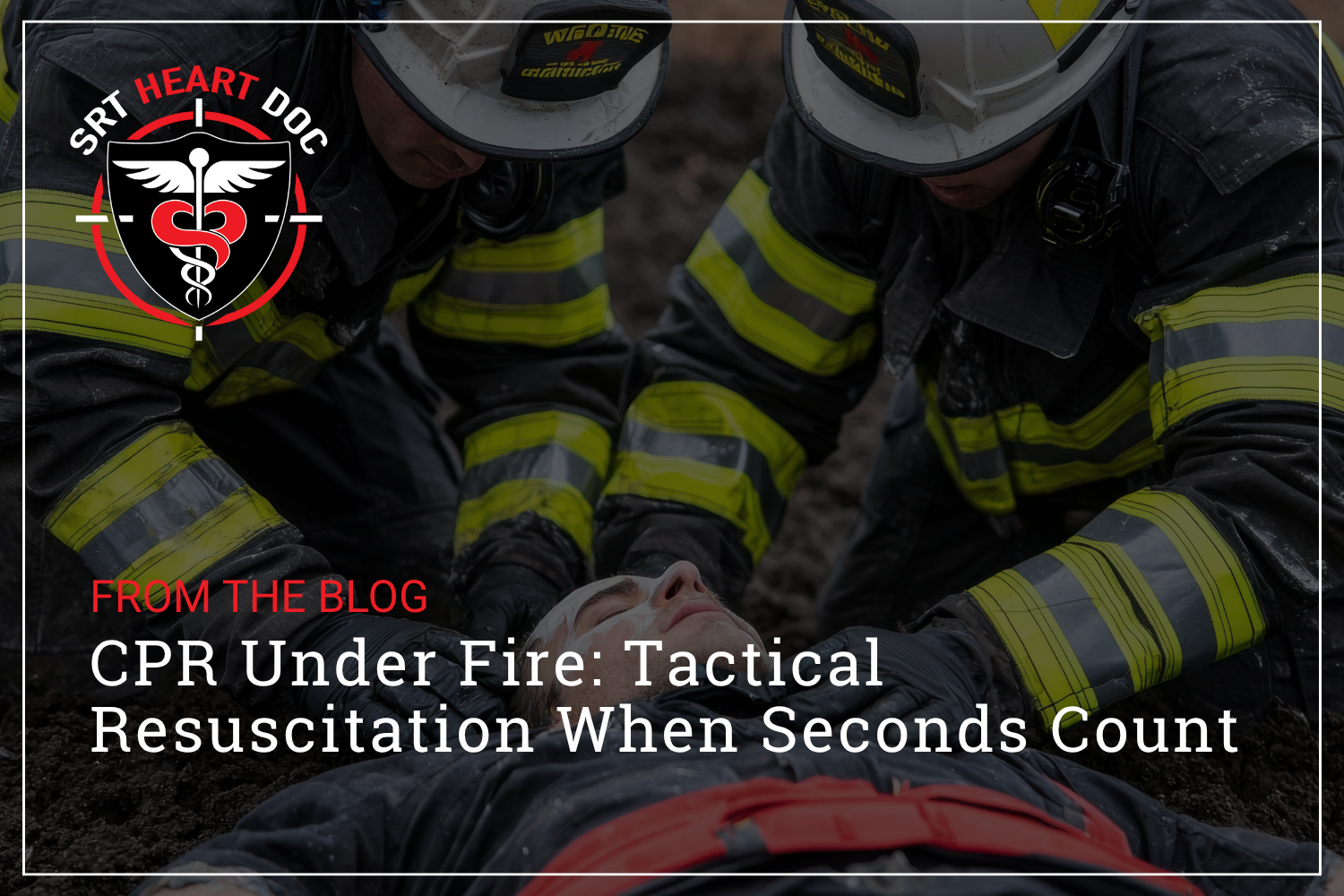
In a perfect world, CPR happens in a well-lit room with a team and equipment nearby. But in tactical environments—under fire, in chaos, or during evacuation—everything changes. “CPR under fire” isn’t just about technique; it’s about survival, risk triage, and calculated action when the environment itself is a threat.
When Is CPR Worth Attempting in the Field?
In austere or combat settings, the question isn’t just “Can we resuscitate?” — it’s “Should we?”
Tactical Combat Casualty Care (TCCC) guidelines emphasize scene safety and operational context before initiating CPR. If the casualty has sustained non-survivable injuries, or CPR endangers the team, it may be deferred.
When return of spontaneous circulation (ROSC) is a reasonable goal, CPR should be:
Focused
Rapid
Supported by evacuation or advanced care
Protected—consider ballistic protection for providers
Modifications in a Tactical Environment
Compression-only CPR is acceptable if rescue breaths aren’t feasible.
Use barrier devices when possible to reduce exposure.
Team cover/fire suppression may be required while CPR is performed.
Evacuation must be coordinated in real time—CPR should not delay extraction unless ROSC is likely.
Special Considerations
Hypothermia, drug overdose, and electric shock can mimic death—CPR may still be life-saving.
Medical gear should be accessible for airway support and bleeding control.
Document timeline and response for debrief and medical reports.
Tactical Takeaway
CPR in the field is not black-and-white. It requires judgment, timing, and adaptability. Make sure your team trains for high-stress scenarios where care and cover must happen simultaneously.
Medical Disclaimer: This blog is intended for informational and educational purposes only. It is not intended to diagnose, treat, or replace medical advice from a licensed healthcare provider. Always consult your doctor before starting any new health regimen or interpreting lab results. If you are experiencing a medical emergency, call 911 or go to the nearest emergency room immediately.
