Heat Stroke or STEMI? Differentiating Emergencies in High Heat
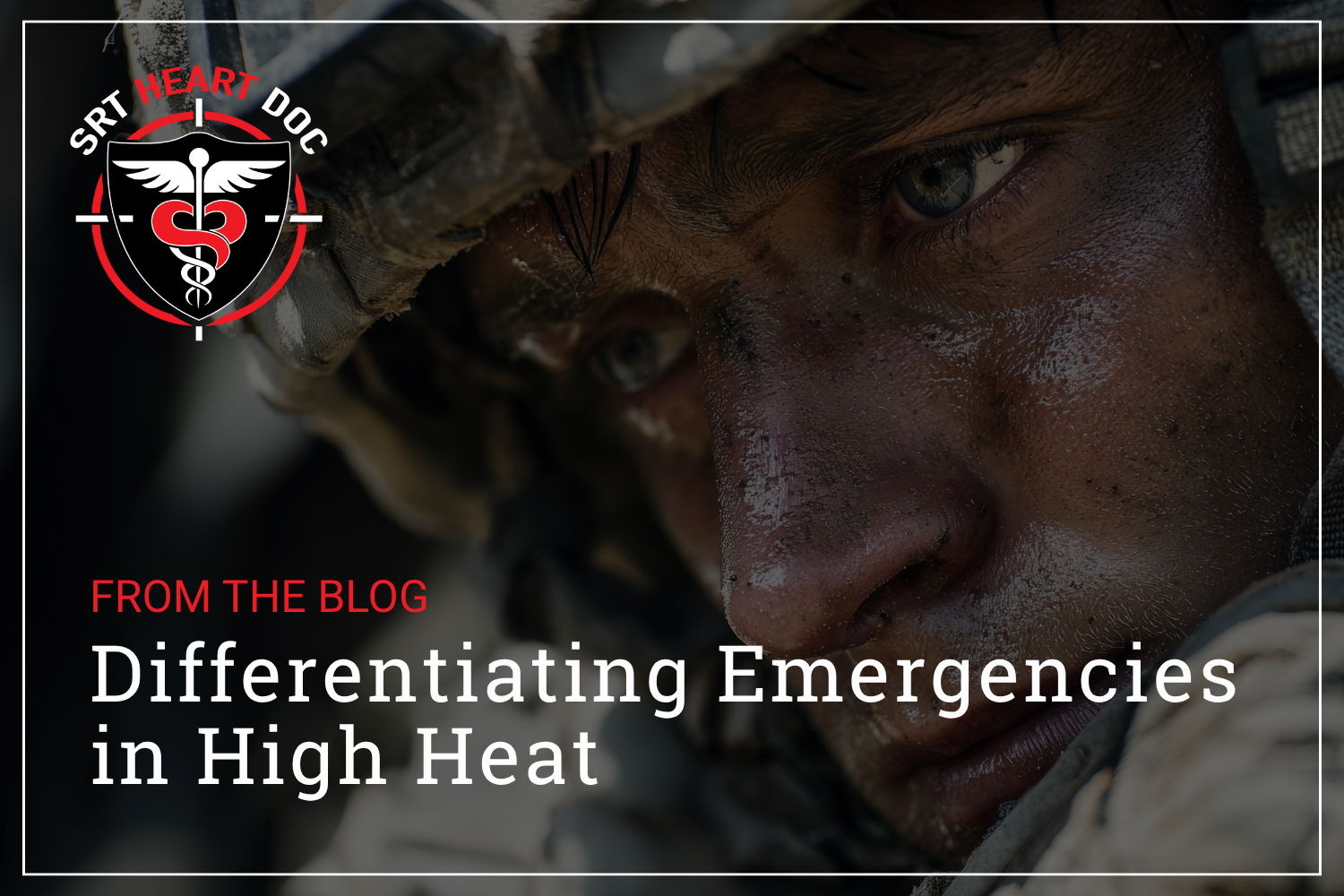
When a teammate collapses during training or an op in extreme heat, time is critical—but so is an accurate diagnosis. Heat stroke and STEMI (ST-elevation myocardial infarction) can look remarkably similar in the field. Misreading the signs can cost precious minutes—or a life. Here’s how to spot the difference and act fast.
Shared Symptoms
Both conditions may present with:
Collapse or unresponsiveness
Confusion or altered mental state
Nausea, vomiting
Rapid heart rate
Chest discomfort
Sweating (or cessation of sweating)
That’s where context and subtle clues become critical.
Signs It’s Heat Stroke
Prolonged exertion in hot/humid environment
Core body temp over 104°F (if measurable)
Dry, hot skin after collapse
CNS dysfunction (agitation, seizures, unconsciousness)
Often younger and otherwise healthy
Immediate Actions:
Rapid cooling: ice packs, immersion, shade
Remove gear and heavy clothing
Evacuate for advanced care
Signs It’s STEMI
Crushing chest pain, often radiating to jaw or left arm
History of heart disease or risk factors (age, hypertension, smoking)
Cold, clammy skin
ECG showing ST elevations
Responds to oxygen and medications
Immediate Actions:
Administer oxygen, aspirin (if allowed), and prepare for evac
Monitor vitals and ECG if available
Protect airway and keep patient calm
Tactical Takeaway
If someone drops in the heat, assess surroundings, medical history, and subtle signs. Heat stroke and heart attack both kill—but the treatments are drastically different. Choose wisely, act fast, and don’t hesitate to call for evac.
Medical Disclaimer: This blog is intended for informational and educational purposes only. It is not intended to diagnose, treat, or replace medical advice from a licensed healthcare provider. Always consult your doctor before starting any new health regimen or interpreting lab results. If you are experiencing a medical emergency, call 911 or go to the nearest emergency room immediately.